
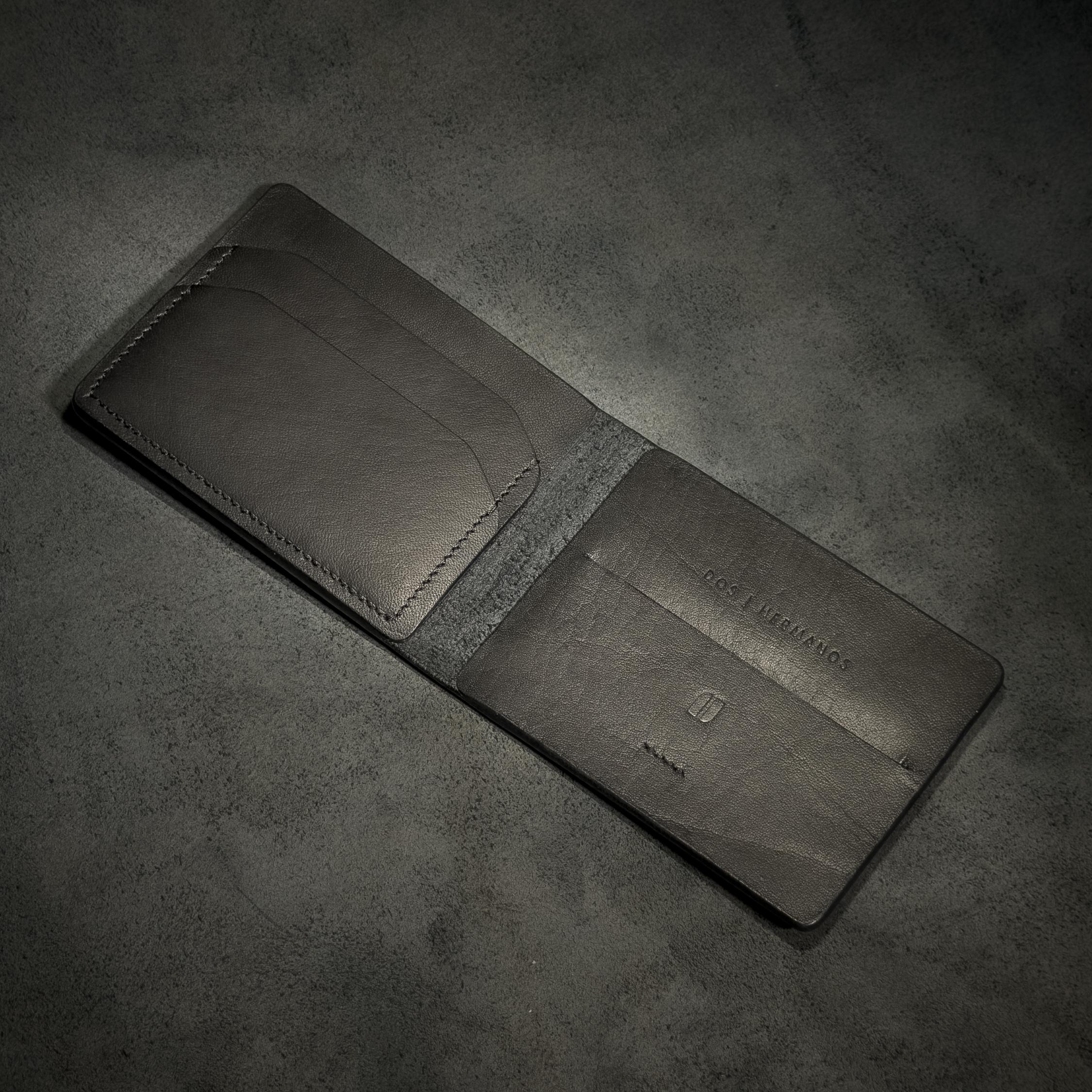
Full Grain Leather
Learn what full grain leather is and why we use it in every Dos Hermanos piece.
When we talk about leather, not all of it is the same. A cowhide has layers, and the layer used to make your piece defines almost everything: how long it lasts, how it ages, and how it feels in your hands. Here we explain what full grain leather is, what other layers exist, and what each one means for the life of a product.
The Layers of a Hide
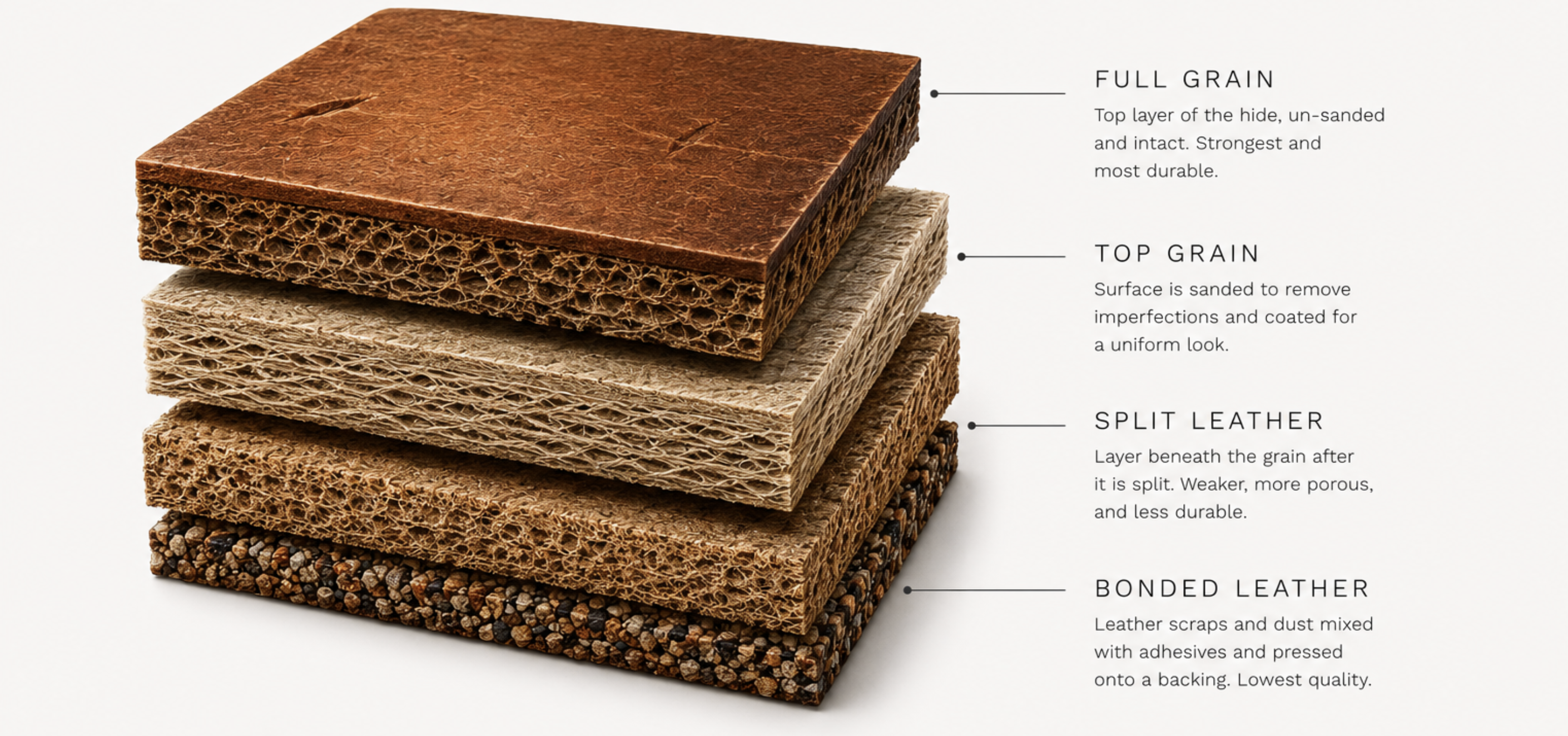
Think of a hide as a cake with several layers. The top layer, the one that was in contact with the outside of the animal, is called the grain. It is the densest part of the hide. Its fibers are fine, tightly packed, and naturally interwoven. That structure gives it resistance to water, abrasion, and the passage of time. Below the grain sits the split, a layer of thicker, looser fibers. It is a weaker material, more porous, with an irregular surface. When a tannery processes a hide, it decides what to do with these layers. That decision gives rise to the different types of leather you find on the market.
Full Grain: The Hide, Complete and Intact
Full grain leather keeps the top layer of the hide exactly as it is. Nothing is sanded, nothing is buffed, nothing is corrected. The surface reaches your hands with its natural grain, including the small marks from the animal's life: a tiny scar, a vein, a variation in tone. Those marks are the signature of authenticity. Only the finest hides can be used this way, because there is no way to hide flaws. What you see is what there is. By keeping the grain intact, the leather also keeps its strongest part. The dense fibers of the surface remain in place, doing their job: protecting, resisting, and enduring. That is why full grain leather is the highest standard there is.
Top Grain: The Sanded Surface
The second tier is known as corrected grain or "top grain." Here the tannery sands the surface to remove imperfections, then applies an artificial finish that imitates a uniform grain. The result is leather with an even, predictable look. That sanding comes at a cost: it removes part of the densest fibers of the hide, the very ones that give it strength. The artificial finish also seals the surface, which keeps the leather from breathing and developing character with use. Much of the leather sold as "genuine" or "premium" in department stores is corrected grain. It is a functional, medium-lifespan material, designed to look good on the day of purchase.
Split and "Genuine" Leather: The Lower Layers
When the grain is separated from the hide, the split remains. It is used to make suede products and many inexpensive items labeled "genuine leather." The label sounds good and confuses on purpose: it is technically leather, and it is also the weakest layer of the hide. Split leather absorbs water easily, loses its shape, peels, and has a short useful life. A split leather belt usually starts to fall apart within a couple of years of daily use. On the last rung sits bonded leather: leather scraps and dust mixed with adhesives and pressed onto a backing. It contains leather the way a hot dog contains meat.
What This Means for Your Piece
The layer defines three concrete things.
Durability. The dense fibers of full grain withstand decades of daily use. A well-cared-for full grain bag or belt can pass from one generation to the next. It is the reason we can back our pieces with a 100-year guarantee: the material makes it possible.
Aging. Full grain leather develops patina. With use it gains a sheen, softens, and takes on the marks of your hands. Honey becomes amber, ocher becomes bronze. Corrected and sealed leathers cannot do this: their artificial finish wears down, cracks, and reveals the sanded layer beneath. One improves with the years. The other simply wears out.
Character. Every full grain piece is unique from day one, and it becomes more yours with every use. Two pieces from the same batch will look different after a year of different lives. That is the point.
How to Recognize It
A few simple signs when shopping:
- ·
- ·
Look for the natural grain. Full grain leather shows small variations and irregularities on the surface. A perfectly uniform texture usually points to an artificially embossed grain.
- ·
- ·
Touch it. Full grain leather feels dense, firm, and flexible at the same time. It absorbs a drop of water slowly and darkens for a moment where it lands.
- ·
- ·
Smell it. Naturally tanned leather has a warm, unmistakable aroma. Plastic finishes smell like chemicals or like nothing at all.
- ·
- ·
Ask. A good maker will proudly tell you which layer they use and where their hides come from. Vague answers say a lot.
Our Choice
At Dos Hermanos we work exclusively with vegetable-tanned full grain leather. It is the most honest raw material there is: it hides nothing, improves with the years, and carries the whole life of the hide within it. Choosing it means paying more for the finest hides and accepting their natural marks as part of the design.
In return, your piece stays with you for decades, ages alongside you, and tells your story on its surface. For us, that trade has always been worth it.
July 18, 2026